
Commercial Repair
Commercial Refrigeration Maintenance: PM Checklist
Commercial refrigeration maintenance checklist: daily, weekly, quarterly, and annual tasks that prevent warm boxes and emergency calls.
July 29, 2026
Last verified
In this article(14)
- Why preventive maintenance pays for itself
- Daily: temperature logs and visual checks
- Weekly: gaskets, airflow and drains
- Quarterly: coils, drains and electrical
- Annually: refrigerant, defrost and controls
- What this repair costs in 2026
- Safety rules before you open anything
- Frequently asked questions
- How often should commercial refrigeration be serviced?
- Does preventive maintenance actually reduce repair costs?
- What should be on a daily refrigeration log?
- Do restaurants need a refrigeration service contract?
- What does a commercial refrigeration PM visit cost?
- Related commercial service pages
This guide answers the questions Twin Cities kitchen operators ask most about commercial refrigeration maintenance, with 2026 pricing, step-by-step triage, and a clear line between what your team can fix tonight and what needs a certified commercial technician.
Quick answer: A commercial refrigeration maintenance program comes down to four rhythms: log temperatures daily, clean gaskets and check door closure weekly, clean condenser coils and flush drains quarterly, and have a certified technician verify refrigerant charge, electrical connections, and defrost operation annually. Kitchens that follow that schedule cut emergency calls sharply and extend equipment life by years.
Why preventive maintenance pays for itself
The math is not subtle. A quarterly maintenance visit costs a fraction of one emergency after-hours call, and far less than a single walk-in of spoiled product. Dirty condensers alone can raise energy consumption by a double-digit percentage and shorten compressor life by years, because the compressor runs longer and hotter on every cycle.
The other benefit is scheduling. Maintenance happens between services; failures happen at 6 p.m. on a Friday.
Daily: temperature logs and visual checks
- Log every box temperature at open and close, using a thermometer in liquid rather than an air reading.
- Confirm doors close fully and nothing is propping them.
- Check for water on the floor under any unit.
- Note any unit running continuously without cycling off.
The log is the diagnostic tool. A box drifting up one degree a week is a coil getting dirty; a box that jumps five degrees overnight is a component failure. Without the log, both look identical the day they become emergencies.
Weekly: gaskets, airflow and drains
Run a dollar-bill test on every gasket, wipe seals with warm soapy water so sugar and grease do not harden them, and clear product away from evaporator air paths. Pour warm water down accessible drain lines to keep them flowing. Check that nothing is stacked within three feet of a condensing unit.
Quarterly: coils, drains and electrical
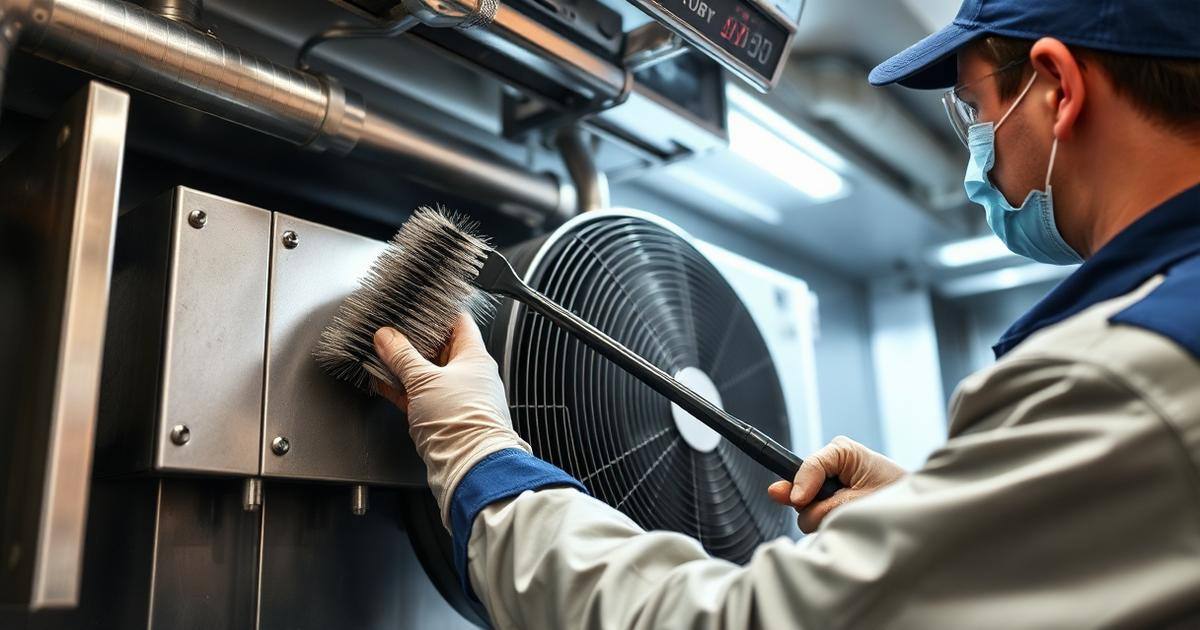
Clean condenser coils with a brush and coil cleaner, straighten bent fins, and vacuum debris from the compressor compartment. Flush condensate drains and confirm P-traps hold water. Have a technician tighten electrical connections - loose lugs cause the intermittent no-cool complaints that nobody can reproduce.
In the Twin Cities, add a June visit for cottonwood, which mats onto rooftop condensers faster than any other debris, and a fall visit before heating season loads the same circuits.
Annually: refrigerant, defrost and controls
An EPA 608 certified technician should verify superheat and subcooling, confirm the charge without topping off blindly, test defrost initiation and termination on freezers, calibrate controls, and inspect insulation and door heaters. Document everything - your health inspector, your insurer, and the next technician all benefit from a written history.
What this repair costs in 2026
ServiceTypical rangeQuarterly PM visit, single unit$185 - $325Quarterly PM, multi-unit kitchenQuoted per siteAnnual sealed-system verification$245 - $395Commercial diagnostic (applied to repair)$199After-hours emergency responsePriority dispatch, quoted firstPricing reflects standard business hours in the Minneapolis and Saint Paul metro. Every job is quoted in writing before work begins, and the commercial diagnostic is credited toward the repair.
Safety rules before you open anything
- Lock out power before cleaning coils or reaching near fan blades.
- Use coil cleaners rated for food-service areas and rinse per the label.
- Never top off refrigerant to mask a leak - it is both illegal and a temporary fix.
- Keep at least three feet of clearance around condensing units at all times.
Frequently asked questions
How often should commercial refrigeration be serviced?
Log temperatures daily, check gaskets weekly, clean condensers and flush drains quarterly, and schedule a full technician inspection annually. Kitchens with fryers near the equipment should move condenser cleaning to every 30 to 60 days.
Does preventive maintenance actually reduce repair costs?
Yes. Dirty condensers raise energy use and shorten compressor life, and most emergency calls we run trace to a maintenance task that was skipped. A quarterly visit typically costs less than one after-hours emergency call.
What should be on a daily refrigeration log?
Box temperature at open and close, taken with a thermometer in liquid, plus notes on door closure, water on the floor, and any unit running without cycling. Trends in the log identify failures days before they become emergencies.
Do restaurants need a refrigeration service contract?
Multi-unit operations and any kitchen with a walk-in benefit most. A contract typically bundles quarterly PM, priority dispatch, and documented service history for health inspections and insurance claims.
What does a commercial refrigeration PM visit cost?
Single-unit quarterly PM typically runs $185 to $325, with multi-unit kitchens quoted per site. Annual sealed-system verification runs $245 to $395, and our commercial diagnostic is $199 applied to any resulting repair.
Related commercial service pages
- Walk-in cooler not cooling: causes and costs
- Commercial appliance maintenance plans
- Commercial refrigeration repair
- Walk-in cooler repair
- Commercial freezer repair
- Commercial appliance repair in the Twin Cities
Central Minnesota Appliance Repair services restaurants, bars, breweries, grocery, convenience stores, schools, and senior living across Minneapolis, Saint Paul, and the surrounding metro. Call (651) 364-7466 for commercial dispatch, including after-hours emergency service.
Frequently asked questions
Quick answers
How often should commercial refrigeration be serviced?
Log temperatures daily, check gaskets weekly, clean condensers and flush drains quarterly, and schedule a full technician inspection annually. Kitchens with fryers near the equipment should move condenser cleaning to every 30 to 60 days.
Does preventive maintenance actually reduce repair costs?
Yes. Dirty condensers raise energy use and shorten compressor life, and most emergency calls we run trace to a maintenance task that was skipped. A quarterly visit typically costs less than one after-hours emergency call.
What should be on a daily refrigeration log?
Box temperature at open and close, taken with a thermometer in liquid, plus notes on door closure, water on the floor, and any unit running without cycling. Trends in the log identify failures days before they become emergencies.
Do restaurants need a refrigeration service contract?
Multi-unit operations and any kitchen with a walk-in benefit most. A contract typically bundles quarterly PM, priority dispatch, and documented service history for health inspections and insurance claims.
What does a commercial refrigeration PM visit cost?
Single-unit quarterly PM typically runs $185 to $325, with multi-unit kitchens quoted per site. Annual sealed-system verification runs $245 to $395, and our commercial diagnostic is $199 applied to any resulting repair.
Related repair services
Need this repaired professionally?
This guide pairs with our same-day in-home repair service. Same techs, OEM parts, 1-year warranty.