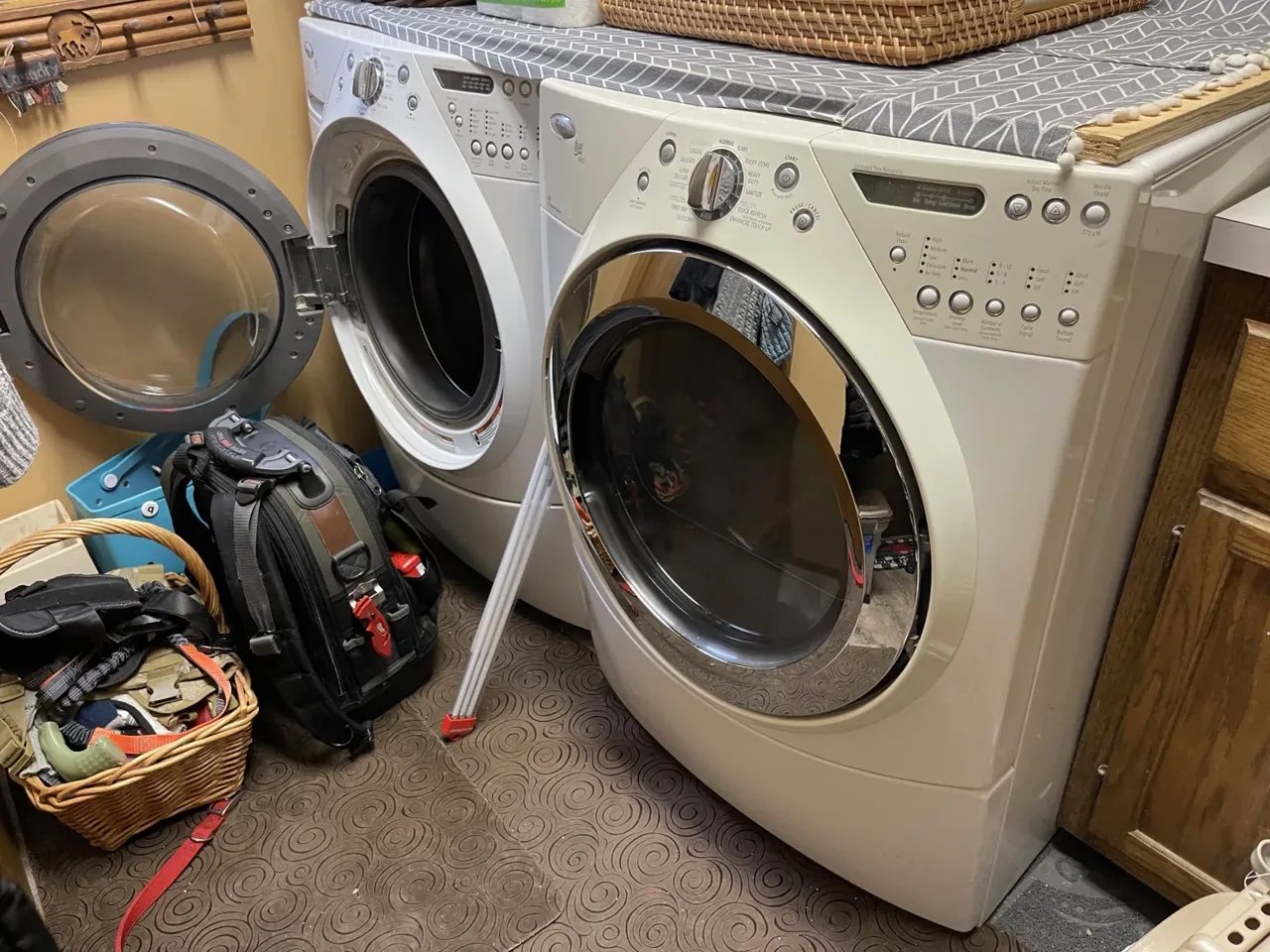
Lint in the exhaust path is a leading factor in dryer fires. We take that seriously on every Whirlpool dryer visit. Lint can build up not only in the screen and the duct, but also in the cabinet around the blower and the burner area, so cleaning the screen is only the start.
In Minnesota, the vent faces two special challenges. First, long runs are common. Basement dryers exit through the rim joist, upstairs dryers exit through a chase or sidewall, and many houses have a few elbows in between. Your Whirlpool installation guide gives the maximum equivalent length for your model, and elbows reduce what you can use. Second, the cold. In winter, exhaust moisture condenses inside a long duct and the hood damper can freeze shut or pack with lint and frost. If your dryer takes longer in January than in July, check the hood.
Rigid metal duct is the standard for this reason. White vinyl and foil accordion are lint traps and burn easily. A transition duct that kinks behind the dryer can halve the airflow, and a screw sticking into the pipe can snag lint all winter. If you are unsure, shut the dryer off and have it checked rather than running another cycle.